
Technology: 10 Powerful Innovations Creating Incredible Opportunities but Hidden Risks
Introduction: Technology Everywhere
Technology is everywhere, from the devices we hold in our hands to the large, national systems and networks. Thousands of us are being replaced in our job roles by supercomputers, which allows us to work in a whole new way. Daily, we have to adapt to new ways of working and living, as the economy, health care, education, our ways of communicating and the ways we entertain ourselves are all being reinvented.
StoriesSignal.com is one example of the rapid transformation is affecting all aspects of society, including businesses. Understanding the rapid change of society, technology, cloud technology, automation, and artificial intelligence are the top emerging technologies.
No longer can technology be considered a collection of simple tools. Technology tools are now creating integrated systems that connect billions of people. Tools to assess the vast number of connections people are making have advanced vastly in the past few decades. Advancements in the internet, data, analysis, robotics, and machine learning have also exploded the number of opportunities that technology offers to society. In this article, I will analyze the major emerging technologies and societal transformations that are reshaping the world.
Break down the meaning and key components of technology.
Technology takes the form of scientific knowledge that attempts to develop tools, systems, or methodologies to address the needs of society or improve efficiency.
The general concept of technology is extremely broad. In society, there is often a misplaced association of technology with a set of associated constructs e.g. smart phones, and personal computers. Technology spans other modern investigations such as quantum computing and artificial intelligence as well as older technology such as the printing press and the wheel.
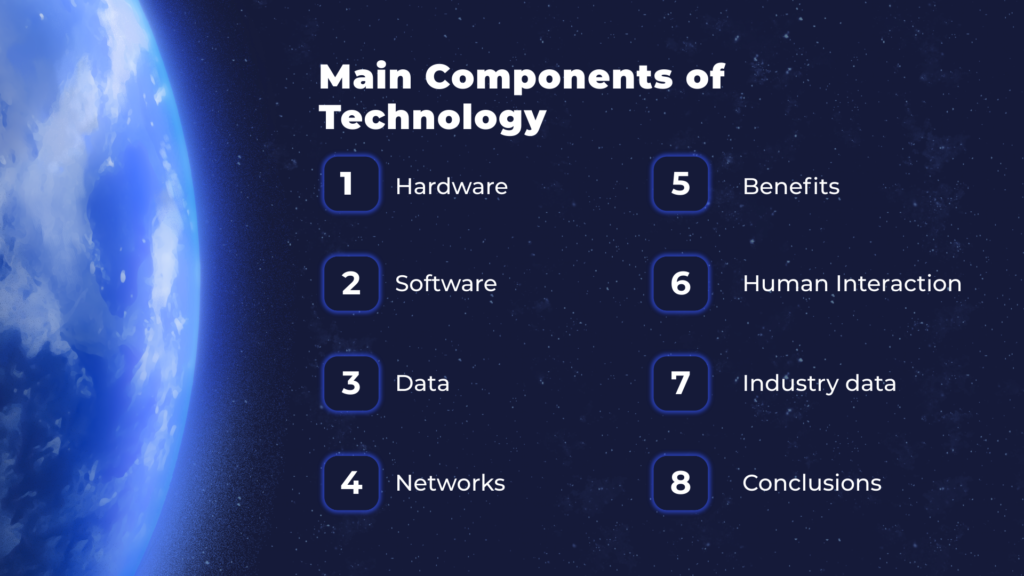
The Main Components of Technology
- Hardware: This includes all physical equipment such as computers, mobile phones, servers, and all physical sensors.
- Software: This includes all operating systems and applications that can be run on the fizzy equipment.
- Data: This is processed, and analyzed information that is knowledge-infused.
- Networks: This refers to the interlinked systems that provide comprehensive communication and transfer of data among the devices.
- Human Interaction: This refers to the way people and systems.
The different components comprise the integrated technology systems that we encounter in our lives.
Technology’s Formation Over Time
Building the technology we use today has taken years of research and development.
The Formation of Basic Technology
Some of the first technology created involved simple construction and planning techniques to create tools that would improve their chances of surviving. Tools that were used to help capture, farm, and gather food. These first innovations in technology, while simple, provided the groundwork for all the following major advances.
Examples include:
- The wheel
- Basic tools used for farming
- Basic systems to record events and thoughts
- The Printing Press
These advances all helped to improve advanced communication and create a more productive society.
The Industrial Age
The Industrial Age is one of the major turning points of technology development. The first machine which used steam engines, which were built during the same period, replaced human hands for the first time, this caused the first mass production of goods.
Examples include:
- The First Steam Engines
- The First Machines Built For the Creation of Textiles
- Railways for mass transport of people and goods
- First Systems of Manufacturing on a large scale
The period was a huge boost for the development of technology and the economy of the world.
The Age of Information
With the introduction of computers and the first forms of the internet in the late 20th century, the world economy was forever changed.
Milestones of this time include:
- The Creation of Personal Computers
- The Creation of the World Wide Web
- Creation of Mobile phones and all that technology entails
- Technology that allows for data remote access and data storage (Cloud)
In The World Today, this period is marked by technology that can create new forms of data.
How Technology Affects Daily Life.
Almost every other part of our daily lives, be it health and fitness, education or transport, relies on technology.
Communication and Social Connectivity
People’s ability to talk to one another has changed entirely.
Some of the other advantages are:
- The ability to communicate as it is happening.
- Collaboration with others from all over the world.
- Working together from different locations is possible.
On the other side, the overuse of technology rather than direct communication can lessen the number of people who interact in person.
Learning Through Digital Platforms
Schools now run on software, thanks to tools that teach online instead of just inside classrooms.
Now available to students is
- Online courses
- Virtual classrooms
- Digital libraries
- Interactive learning tools
Nowhere is learning easier than today, thanks to tools that bring lessons to anyone, anywhere. A single click opens doors once locked by distance or cost.
Healthcare Innovation
Faster detection now shapes how illnesses are managed day by day. Tools respond alongside doctors, adjusting steps in real time. Care shifts quietly beneath screens and sensors, moment by moment.
Important innovations include:
- Telemedicine
- Wearable health devices
- AI-powered diagnostics
- Robotic surgery
Faster diagnosis now allows physicians to spot illnesses sooner, while better tools improve how precisely care is delivered.
Business and Productivity
Fueled by digital tools, companies boost performance while staying ahead of rivals. Where systems streamline tasks, results improve through sharper focus.As workflows evolve, advantages emerge – not slowly, but continuously. Driven forward by change, firms adapt using smart solutions. Though methods differ, outcomes align toward stronger positioning.
Technological tools help organizations:
- Automate routine tasks
- Manage large data sets
- Improve customer experiences
- Optimize supply chains
Faster growth tends to follow when firms embrace up–to–date tools. Better results in the marketplace appear more frequently among those using current systems.
Artificial and Machine Learning
From experience with information, machines gain skills via artificial intelligence, moving beyond rigid instructions. Because they adjust through exposure, automated processes handle work formerly managed by individuals, reducing ongoing supervision. Patterns form gradually during repeated trials, allowing knowledge to develop without detailed coding. When responses match expectations in unfamiliar scenarios, behavior begins resembling human ability.
Applications include:
- Voice assistants
- Fraud detection
- Personalized recommendations
- Autonomous vehicles
AI is transforming industries such as finance, healthcare, and logistics.
Internet of Things
A web of smart gadgets exchanges data constantly, forming what is known as the Internet of Things. While one device talks to another, information flows across this linked system. Because these objects share signals, they operate in sync without human input. From sensors to appliances, each piece connects through invisible threads of communication. Wherever such technology exists, tasks become automated quietly behind the scenes.
Examples include:
- Smart homes
- Connected cars
- Smart cities
- Industrial sensors
By gathering information, these tools help boost performance while guiding smarter choices. Efficiency rises when insights shape how systems operate. Decisions become more precise through continuous monitoring. Data flows feed adjustments that refine outcomes over time.
Blockchain Technology
A single record of exchanges sits across many computers at once. This system locks data into place using strong verification steps. Information stored there resists changes after entry. Security emerges through shared agreement on what counts as valid.
Besides being common in:
- Cryptocurrency
- Supply chain management
- Digital identity verification
- Smart contracts
This system makes operations clearer while lowering chances of dishonest practices.
Quantum Computing
A different kind of machine could handle tough calculations more quickly than older models. Though still early days, these systems work on unusual principles that speed things up. Their power comes not from size but how they manage information. Instead of standard switches, tiny particles help explore many answers at once. This shift might change what we expect from computing entirely.
Even though it’s not fully ready, quantum computing might change areas such as:
- Cryptography
- Drug discovery
The Impact of Technology on Economic Development
Fueled by innovation, technology shapes how economies grow worldwide. While digital tools spread rapidly, their impact shifts across regions unpredictably. Because access varies, outcomes differ even when systems appear similar. When infrastructure supports it, progress accelerates—yet barriers often persist beneath the surface.
Faster economic growth tends to emerge where nations prioritize digital infrastructure alongside research spending. Though not guaranteed, such investments frequently align with stronger market expansion. Where technology networks grow, productivity gains often follow closely behind. Progress in these areas usually supports broader financial momentum across industries.
Benefits include:
- Increased productivity
- Job creation in technology sectors
- Innovation and entrepreneurship
- Global market connectivity
Still, tech sometimes brings issues—automation, for example, may push workers out of their roles.
Finding equilibrium between new ideas and worker adjustment supports lasting growth. Progress holds steady when change meets learning in step.
People Also Ask
What is technology in simple words?
Created through science, technology includes tools, machines, and systems built to simplify work. Though often unseen, these inventions shape how people solve problems each day. Efficiency grows when methods improve thanks to clever design rooted in research.
Devices like computers or smartphones show up everywhere. Medical tools function alongside web networks daily. These items form part of routine operations in many areas. Internet-connected machines help maintain modern services constantly.

The Future of Technology
Flying beyond today’s limits, tomorrow’s tools could reshape how we live. A shift already humming beneath daily routines might redefine connection, work, even thought itself.
Upcoming innovations may include:
- Fully autonomous transportation systems
- Brain-computer interfaces
- Advanced robotics
- Sustainable green technologies
- Space exploration technologies
Change could reframe economic systems while altering human connections to technology. Though subtle, shifts might unfold across industries where automation becomes routine.
Still, ethics need careful attention if progress is to serve everyone fairly.
Embracing Technology with Care
While some changes feel subtle, others remake entire systems without warning. Still, one thing stays clear: influence spreads wider than ever before.
With insights from sources such as StoriesSignal.com, awareness of tech developments becomes key in today’s fast–changing landscape. Because technology shapes how people and institutions operate, grasping its upsides along with potential downsides supports better judgment. When digital tools grow more central, seeing beyond surface–level progress helps guide meaningful choices.
When handled with care, technological progress offers real opportunities – provided ethics guide each step forward. Unexpected benefits emerge if people stay mindful of consequences throughout development.
One thing seems clear: what lies ahead could transform how we interact with machines in ways hard to predict. Technology might just become the quiet architect of tomorrow’s everyday life.