
Craft Technologies: 7 Powerful Craft Education Technologies Transforming Learning
Introduction
Faster change sweeps through classrooms today, yet old–making ways still hold ground. Craft meets code inside schools, shifting how making is taught – think carving, weaving, shaping, building, but wired differently. Not just saws or needles anymore; screens and machines join the process too. Old school doing blends with new tools, opening fresh paths for learners to try, fail, adjust. Each project becomes a mix of grit, thought, texture, and circuits stitched together quietly.
Now imagine a place where handmade skill meets tomorrow’s tech. Sites such as StoriesSignal.com show these shifts in motion. Not just theory – learners build things using gear once found only in labs. Picture classrooms with 3D printers humming beside sketchpads. Laser cutters slice precise shapes guided by student hands online. Augmented reality overlays tutorials right on workbenches. Design programs help turn rough drafts into real prototypes. Each tool opens paths that didn’t exist before. Learning reshapes itself when making becomes faster, clearer, bolder.
What happens when hands–on making meets modern tech in classrooms? Tools once seen only in workshops now shape how students learn creativity. A change like this does not arrive by accident. Behind it sits software, machines, devices – redefining what building means in learning spaces. Why bother at all? Tomorrow’s creators need ways to think with their hands just as much as their minds.
Understanding Craft Technologies?
From weaving looms guided by code to pottery shaped with precision software, old–school making meets today’s tech. Where hands shape ideas, machines often step in – not to replace but to extend. Tools once limited to studios now link with screens, sensors, or networks. Learning how things are built blends physical touch with digital feedback loops. Designing can start on paper, shift to simulation, then return to tangible form. Products emerge that carry both human marks and digital traces. Some begin entirely by hand, later refined through algorithms. Others launch in pixels before becoming real under fingers. Making stays central – whether aided by a laptop or led only by instinct.
Tools come in many shapes, yet these stand out. Systems appear varied though similar in purpose. A broad mix fills the list – from starters to specialists. Each piece works differently but fits together somehow. Some help tasks move faster while others track progress quietly behind scenes
- Digital fabrication tools (3D printers, CNC machines)
- Design software
- Virtual and augmented reality tools
- Online craft learning platforms
- Smart manufacturing technologies
- AI-assisted design systems
From chalkboards to code, teaching skills now mixes old methods with new tools. Craft knowledge grows through both hands–on practice and screen–based learning. Some classrooms keep classic techniques alive while trying out digital upgrades. Tradition finds fresh form when paired with modern tech approaches. Learning by doing stays central even as devices enter workshops.
The Growth of Tools Used to Teach Making Skills
Craft education didn’t stay the same – it shifted over time. First came hands–on workshops, then schools began shaping it into courses. After that, online platforms opened access wider than before. Each change brought new ways to learn making things by hand.
Traditional Craft Learning
Back in the day, learning a craft meant sticking close to someone who already knew it well. Watching every move mattered just as much as trying things hands on. Weaving threads, shaping clay, chiseling wood – these arts moved from one person to another over time. Knowledge flowed quietly, built piece by piece through doing.
This model worked well – yet it came up short in key areas
- Limited access to expert mentors
- Slow learning processes
- Lack of scalability
Digital Integration
Began by reshaping classrooms, computer tech shifted the way hands–on making was learned. Instead of starting with scissors or saws, learners first shaped ideas on screens.
This stage introduced:
- Computer-Aided Design (CAD)
- Digital sketching tools
- Online tutorials and learning platforms
Smart Craft Education Now
Fine tools meet smart machines now, shaping how people learn making stuff. Designs take shape first on screens before touching real materials somehow. Testing ideas happens fast when models run through trial runs digitally at least. Building things moves quicker once robots handle cutting or assembling tasks too.
Now ideas flow easier, more people can join in, while making things by hand feels quicker to learn.
How Craft Technologies Fits Into Today’s Classrooms
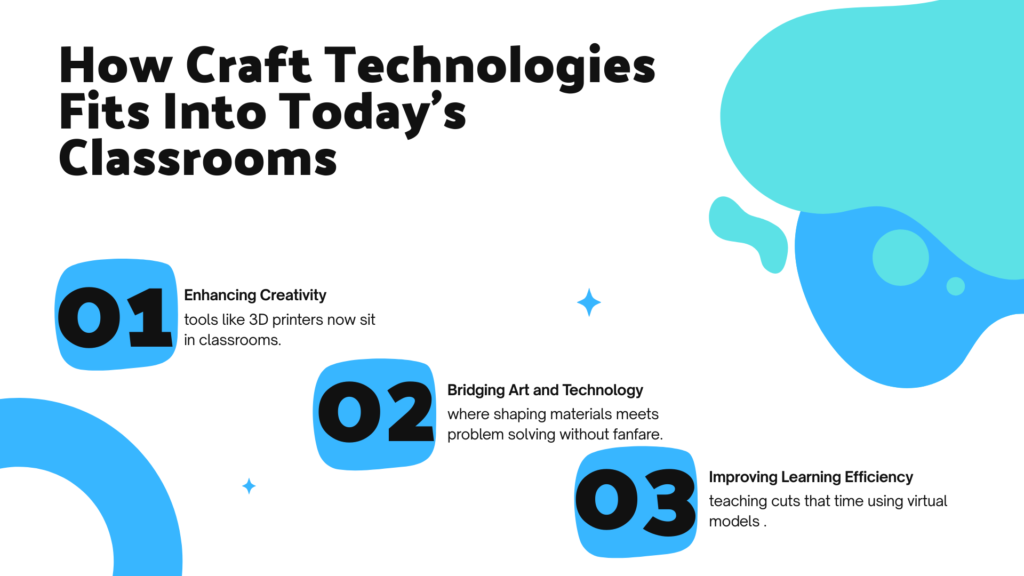
1. Enhancing Creativity
Out of reach just years ago, tools like 3D printers now sit in classrooms, opening doors. Not limited to pencil and paper anymore, kids test ideas using virtual sketches before building real versions.
This encourages:
- Innovative thinking
- Rapid prototyping
- Creative experimentation
A single idea might lead a student to build shapes too tricky for old–school tools. Yet hands–on trial could unlock forms once seen as impossible.
2. Bridging Art and Technology
Folks often overlook how making things by hand pulls together creativity and building skills – yet it happens every time. A quiet mix, really, where shaping materials meets problem solving without fanfare.
Students now learn:
- Digital design principles
- Material science
- Production techniques
From sketching ideas to building real things, learners explore fields like making products, shaping spaces, or crafting objects with machines. A mix of hands–on work and big–picture thinking opens paths where imagination meets practical skills.
3. Improving Learning Efficiency
Years of repetition usually shape skill in handwork. Still, tech–based teaching cuts that time using virtual models along with responsive exercises.
Students can:
- Start training on simulations ahead of touching actual supplies
- Receive instant feedback on designs
- Correct mistakes without wasting resources
Key Tools Changing How People Learn
1. 3D Printing
3D printing has become one of the most influential craft technologies in education.
Faster now – digital designs turn into real objects before lunch. Trying new forms, frames, or stuff? Easy. Machines shape ideas fast.
Benefits include:
- Rapid prototyping
- Reduced material waste
- Faster design testing
2. Laser Cutting Technology
Fine lines appear where the beam touches – wood, acrylic, even cloth shaped by focused light. Instead of blades, heat traces each path with quiet accuracy. Leather holds crisp marks when the machine moves without shaking. Where tools might tear, this process melts just enough to define edges. Each material responds differently, yet all accept the glow in silence.
Fine details come alive in student projects when laser cutters take over tasks too tricky by hand.
Applications include:
- Jewelry design
- Woodcraft
- Textile patterns
- Decorative crafts
3. CNC Machines
A machine guided by computer codes shapes wood or metal without hand tools. These systems follow digital plans to cut and form parts automatically.
From a workshop bench, CNC machines let learners explore how computers shape materials without losing hands–on skill. Though guided by code, the work still carries the mark of human touch.
4. Virtual Reality Craft Training
A student might shape clay on a virtual wheel, guided by touchless motion controls. Holographic tools appear when needed, vanishing after use. Mistakes dissolve without waste. Skills build through repetition inside simulated studios. Feedback comes instantly, embedded in each gesture. The space shifts based on project needs – woodworking one moment, glassblowing next. Practice happens anytime, free from physical material limits.
For example, students can simulate:
- Pottery wheel techniques
- Wood carving
- Sculpture design
Fear slips away when practice happens inside a headset first. A different kind of readiness builds through simulated experience. Confidence grows not from lectures, but repeated virtual tries. Before touching actual equipment, the mind has already moved through steps. Mistakes made here cost nothing, yet teach just as much.
5. Augmented Reality Learning
A screen paints data across real scenes. What you see mixes bits with bricks. Reality gains layers from machines. Images float on top of what’s there. The everyday gets extra pieces from tech.
A student might see each next move appear right where they’re building. As hands shape the material, digital hints float nearby like quiet guides.
Learning becomes sharper when done through interaction, mistakes drop as a result.
6. AI-Assisted Craft Technologies Design
Folks are starting to weave artificial intelligence into how they make things by hand. While machines learn, handmade methods gain new tools. Even so, old skills still matter just as much. Because of this shift, crafting isn’t what it used to be. Still, people adapt without losing their touch.
AI tools can:
- Suggest design improvements
- Generate creative patterns
- Analyze structural strength
Fueled by fresh ideas, learning moves faster when tools shape imagination alongside speed. Creativity grows stronger because support shows up quietly through smart design.
7. Online Craft technologies Learning Platforms
Learners find help through web tools that host videos, practice sessions, or e–books.
Worldwide specialists share hands–on techniques through these learning spaces.
Examples include:
- Video tutorials
- Virtual classrooms
- Digital craft communities
Craft Technologies Across Education Areas
Design Schools
From clay to code, schools shape making through hands–on tech. Tools once used by artisans now guide how students build digital objects. Learning happens when old methods meet machine–driven design. Practice blends material skill with modern prototyping. Students explore creation by linking tradition to new production ways.
Finding balance between old methods and new software comes naturally to learners. While hands–on skills remain central, digital platforms shape how ideas take form. Tools change, yet the core of making stays rooted in practice.
Art Education Programs
Fresh tools shape how students work clay, weave cloth, fabricate forms. Learning bends around new machines just like old hands–on ways. Some classrooms blend digital cutters with pottery wheels. Others mix code–driven looms into fabric classes. Each material finds a rhythm with evolving methods.
Fresh software opens doors for makers to try different ways of expressing ideas. A shift happens when tech blends into the process, quietly changing how art takes shape.
STEM Education
Building things by hand shows up more often in science classes these days. Getting students to shape ideas with tools helps them think differently while they learn.
Fabrication tasks open doors to understanding engineering ideas. Creative projects help students grasp core principles. Working by building things teaches design in a hands–on way.
How Craft Education Tools Help Learners
Increased Engagement
Fun sparks when lessons come alive through clickable helpers on screen. What changes is how students stick with tricky ideas, thanks to playful nudges built into each task.
When students build things they can see, their drive grows. Making actual objects lights a spark inside them. Seeing progress step by step keeps energy alive. Hands–on work pulls effort forward naturally. Creating something real shifts how they engage. The act of finishing changes motivation completely.
Skill Development
Craft technologies help students develop valuable skills such as:
- Digital design
- Problem solving
- Creative thinking
- Technical manufacturing skills
Career Opportunities
Folks in today’s workplaces need to grasp how tech works alongside creative thinking. While skills blend, one thing stays clear – mixing these worlds opens doors nobody expected.
Young people who learn hands–on making skills often find work in areas like these
- Product design
- Architecture
- Fashion design
- Digital manufacturing
- Creative entrepreneurship
Problems Using Craft Technologies
Yet these tools bring hurdles along with benefits. A few downsides pop up even when things work well. Some issues appear despite strong points. Still, problems exist alongside helpful features. Not everything runs smooth just because it helps.
High Costs
Few classrooms find it easy to afford tools like 3D printers or CNC machines. While powerful, these devices often stretch tight budgets too far.
Teacher Training
Finding their way around fresh tools matters most for teachers now. Ways of making sense of digital shifts keep changing underfoot. Staying clear on methods helps lessons land better each time. Moving with tech means classrooms stay alive differently every day.
Balancing Old Ways With New Ideas
Old ways of making things by hand matter, yet new gadgets can help. Tools change, still the skill stays alive through practice. Even with machines around, touch and time keep value. What was built slowly holds meaning now too.
Future Craft Technologies Unique Insights
Not every talk around making things dives into old–school methods. Yet here’s where it gets interesting – people mixing hands-on skill with smart tech. Machines listen. Humans shape. Together, something different grows.
Few changes could show up down the line
Smart Craft Labs
Some schools could set up clever workshop spaces where computer–guided design software works alongside machines that build things automatically.
Global Collaborative Crafting
Students from different countries may collaborate on craft technology projects through digital platforms.
Sustainable Craft Production
Faster building techniques might cut leftovers, pushing greener ways to make things. One step at a time, cleaner production sneaks in through smarter tools.
Out of nowhere, fresh ideas are changing how handmade goods come to life – offering makers paths they hadn’t seen before. A shift sneaks in, not loud but steady, pulling old methods aside so something different can take space.
People Also Ask
What are craft technologies?
From handwork roots grow clever blends of old–making ways with today’s tech tricks. Machines like 3D printers shape objects layer by layer, guided by digital plans instead of just hands. Computer–run cutters carve materials precisely, replacing some hand tools but keeping creative control alive. Augmented reality helps learners see techniques unfold right before their eyes, mixing real and virtual views. Software shapes ideas into buildable forms, letting makers test before touching material. Each tool links past skill with present code, reshaping how things come to life.
How are craft technologies used in education?
Craft tech shows up in classrooms where making things by hand meets modern tools. From sketching ideas on screens, learners shift toward building real versions of their work. Machines such as 3D printers take those designs one step further into actual objects. Laser cutters help turn flat materials into shaped parts through precise beams. Problem solving grows stronger when trial, error, and hands–on fixes come together. Design skills build slowly while students test how forms function in reality.
Why are craft education technologies important?
Starting fresh each day, tools made for teaching art boost how kids think outside lines. One way happens when focus sharpens through playful digital tasks instead of dull drills. Another path opens where making things by hand meets smart software that guides without taking over. Behind every screen built for classrooms lies a chance to shape futures tied to design, animation, or building virtual worlds.
What skills can students learn from craft technologies?
Students can learn:
- Digital design
- Prototyping
- Material handling
- Creative innovation
- Technical manufacturing skills
Could handmade skills be fading as craft tech moves in?
Not at all. Craft technologies actually build on classic skills, using fresh methods to open up different ways of making things. While old practices stay central, they grow richer when paired with modern approaches. These additions do not replace handwork but give it room to stretch further. Tools change, yes – but care, precision, and intent remain steady.
Using craft education tools in schools
Educational institutions can adopt craft technologies through several strategies.
Building Digital Fabrication Labs
Out there in classrooms, hands–on zones might appear – filled with gadgets such as 3D printers or maybe even laser-cutting machines. Tools show up where students tinker, build things slowly. A space opens up when creativity meets hardware. Printing objects layer by layer becomes normal next to precise beams shaping materials. Learning takes shape through touch instead of only words on a screen.
Train Educators
Fresh skills begin when educators learn by doing, hands–on practice shaping how craft tech enters classrooms. Learning unfolds differently once guidance shifts from theory to real work, experience guiding each step forward.
Encourage Project-Based Learning
Fiddles with old–school gear while tapping keyboards – that sticks. Making stuff that works lights up young brains more than memorizing facts ever could. Hands shaping things, eyes tracking screens, ideas jumping between paper and pixels – that kind of mix clicks. Not just sitting, not just watching – doing makes lessons stay.
Maker Spaces in Craft Education
Fiddles with handmade tech happen in shared rooms meant for trying stuff out. These spots invite kids to poke at tools while building things by hand.
These spaces encourage:
- Creativity
- Innovation
- Collaboration
Fresh learning spots are popping up in classrooms, where building things by hand becomes part of the day.
Internal and external learning resources
Finding new ways to learn about making things often leads students into fresh material. Educators might stumble on tools that reshape how they teach building skills. Jumping into different guides opens paths beyond standard lessons.
- This page links to another part of the site
- You can find more on this topic at the source linked here
Looking deeper here might uncover how new tools shape learning. What shows up often ties tech shifts to classroom changes.
Conclusion
Hands–on making meets modern tech inside classrooms, shifting the way young minds build skill sets. Where old–school artistry blends with software and machines, teaching gains new motion and purpose. Learning breathes differently when hammers share space with code. Tools once kept apart now work side by side, shaping ideas in real time. This mix stirs fresh thinking, nudges imagination off flat pages. Classrooms hum a little louder when sawdust dances above circuit boards.
StoriesSignal.com keeps digging into new tech, showing how craft classes are changing fast. When students create by hand using digital tools, they build art sense along with real–world tech know–how. This mix shapes what learning looks like ahead.
Not far off, skillful making finds its path through people thinking alongside smart tools. Those classrooms, teachers, students already weaving hands–on creation with digital methods now – these are the ones shaping what inventive work becomes next.